
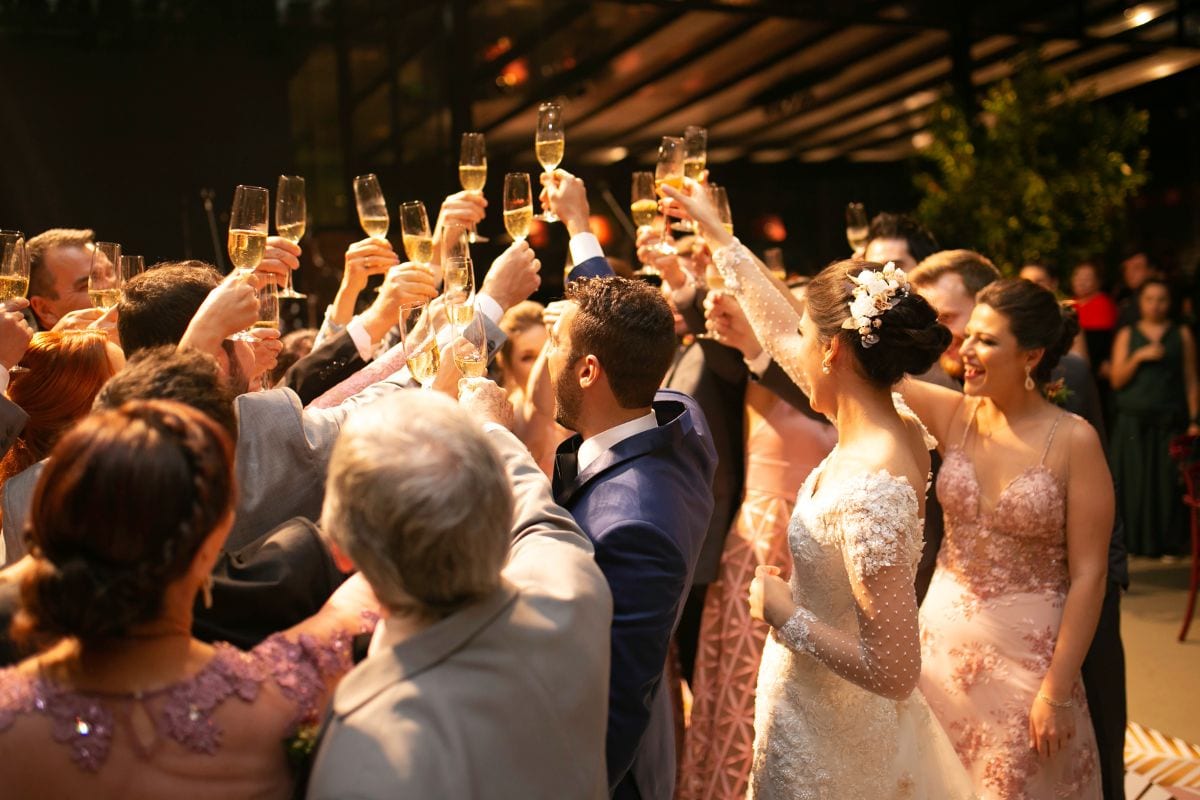
More and more couples are looking to escape the rigidity of traditional seated banquets and are considering a cocktail-style wedding, where freedom of movement and interaction take center stage. If you're weighing this option, you're probably wondering about guest comfort, the amount of food, or how to manage timing so the event never loses its rhythm or elegance.
Planning a wedding of this kind calls for a different approach than a conventional celebration. From the menu to the furniture layout to the entertainment, every detail matters in creating a dynamic atmosphere. Below, we break down the keys to designing the perfect cocktail-style reception, answer the most common questions about etiquette, and share the best ideas to make your day a complete success.
What is a cocktail-style wedding?
A cocktail-style wedding, also known as a standing reception, is a format that does away with strict table and seat assignments for every guest during the main meal. Unlike a traditional three-course plated banquet, the food here is served through a continuous circulation of waiters carrying trays, alongside fixed stations or themed buffets.
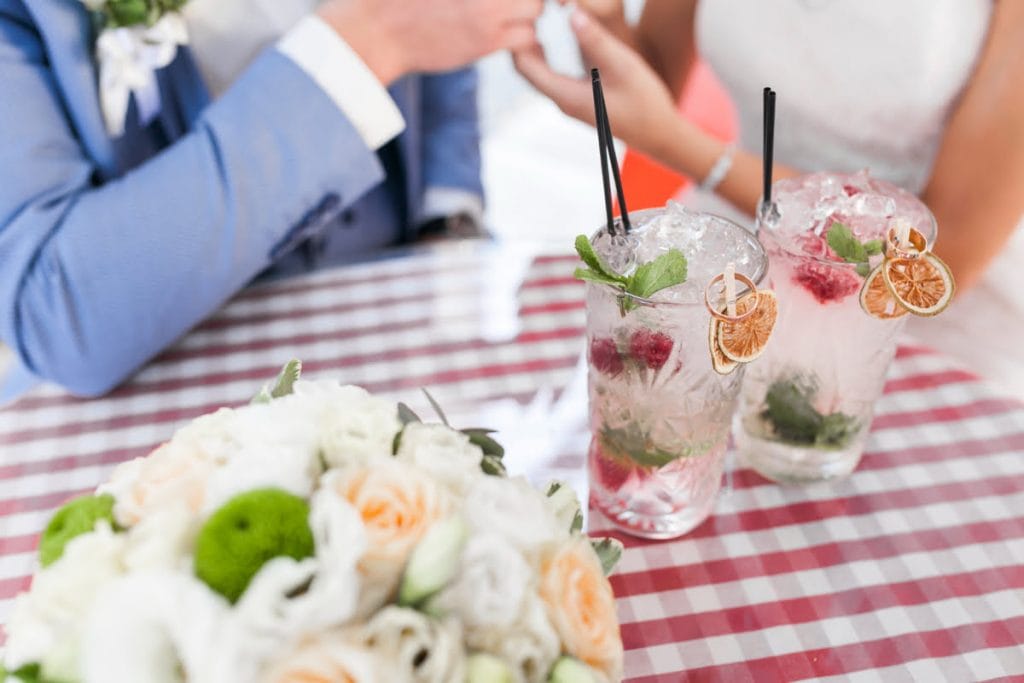
This style fits perfectly with the idea of an informal wedding that's still sophisticated, where socializing comes first. The couple can talk to every guest instead of only those seated beside them, and guests are free to move around, try different wedding cocktails, and mingle across different groups. It's a more varied culinary experience, built around the idea of finger food and gourmet bites.
Differences from a traditional wedding: which is better?
Choosing between a classic banquet and an extended wedding cocktail reception depends on the couple's style and the atmosphere they want to create. Neither option is better than the other, but the experiences are very different. To make the right call, it's essential to understand how the event's dynamic changes in key areas like etiquette, food and budget.
Etiquette and the flow of the event
At a conventional wedding, timings are tightly set and guests spend much of the time seated. At a cocktail-style event, on the other hand, etiquette relaxes considerably. There's no need for the dreaded seating plan, which removes a major headache for the couple. The atmosphere is more fluid and festive from the very first moment, letting the party start much earlier.
Variety in the cocktail menu
While a traditional menu usually consists of a starter, fish, meat and dessert, a cocktail menu allows for an explosion of flavors. You can offer between 15 and 20 different wedding starters, from cold and hot options to live show cooking. This ensures there's something for every taste, minimizing the risk that the main course won't suit someone. A well-paced cocktail dinner also tends to feel more generous when the dishes come out at the right rhythm.
Cost of a cocktail-style wedding: is it cheaper?
There's a myth that these celebrations are cheaper, but the cost of a cocktail-style wedding can be similar to, or even higher than, a seated banquet. While you save on table decor and printed menus, the staffing line item is usually higher, since more waiters are needed to keep food and drink flowing smoothly to every corner. On top of that, the quality and variety of ingredients in a good catering service shouldn't fall short of what you'd expect from a plated main course.
Essentials no cocktail-style wedding should be without
For a cocktail dinner to work and not turn into an uncomfortable experience, certain logistical and entertainment elements are non-negotiable. The key to success lies in balancing the informality of the format with guest comfort, without forgetting the element of surprise that keeps the atmosphere lively throughout the celebration.
Rest areas and supporting furniture
Even though it's a standing event, skipping seating altogether is a mistake. The golden rule is to provide seats for at least 40-50% of guests. It's essential to combine high cocktail tables with chill-out areas, sofas or dressed low tables. Older guests, pregnant guests or anyone in heels will appreciate having somewhere to rest and enjoy their wedding cocktail comfortably. Decorating these corners is key to dressing the space.
Visual, participatory entertainment
Since guests aren't "trapped" at a table, entertainment needs to be dynamic and continuous. This is where technology plays a key role. Having an interactive zone, like a designer wedding portrait station, makes the most of people's constant movement. Guests come over, interact, and leave with an instant printed keepsake, avoiding dead time.
For those looking for an extra layer of innovation, the cocktail format is the perfect setting for immersive experiences like 360 wedding video, where guests can record fun clips with motion effects without interrupting the flow of the party.
Live music and ambiance
Silence is this format's enemy. A cocktail band, a jazz combo or a DJ playing ambient music is essential to fill the space without drowning out conversation. The music should accompany the wedding food and build in intensity as the night moves toward the open bar.
How to plan a cocktail-style wedding step by step
Planning this type of event calls for pinpoint precision in timing and service. Since there's no fixed "course order" dictated by table protocol, the couple has to create the structure themselves so the experience makes sense. Here's the real roadmap for keeping everything flowing:
1. Design a staggered food timeline
The biggest mistake in cocktail-style weddings is bringing out all the food at once, or taking too long between courses. The ideal structure is progressive: start with a welcome drink and light cold canapés. Thirty minutes in, bring out hot canapés passed by waiters. Around the midpoint of the event, open the food "corners" or stations (sushi, rice dishes, barbecue) so people move around to reach them. Finish with a tray-passed dessert service so nobody misses the final sweet touch.
2. Create interaction zones to avoid stagnation
At a seated banquet, people talk to whoever is next to them. At a cocktail reception, you run the risk of closed-off little groups forming. To avoid that, spread points of interest across the space that encourage guests to walk around. Placing a drinks bar at one end and a food station at the other forces circulation.
It's also very effective to strategically place elements that spark curiosity and participation. For example, reserving a corner for a visual experience like a Glambot, similar to the ones used on red carpets, gets guests moving to record their video, breaking up any static groups and creating a far more sophisticated, fun atmosphere.
3. Plan furniture using the 50% rule
Being a "standing wedding" doesn't mean there are no chairs at all. You need to guarantee seating for at least 50% of your guests, but never at banquet tables. Mix high bistro-style tables (essential for resting drinks) with sofa areas, poufs and low tables with chairs. This creates different visual heights and lets older guests rest without feeling cut off from the party.
4. Manage lulls with dynamism
With no courses to mark the passage of time, there can be lulls where the energy dips. It's essential to have micro-activities ready. If you're wondering what to do at a wedding to surprise guests in this format, the key is immediacy. Setting up a super slow motion camera in a high-traffic area lets guests play with confetti or the movement of their outfits while enjoying a drink, keeping the fun high without needing to interrupt the conversation or the music.
5. Plan the transition into the party
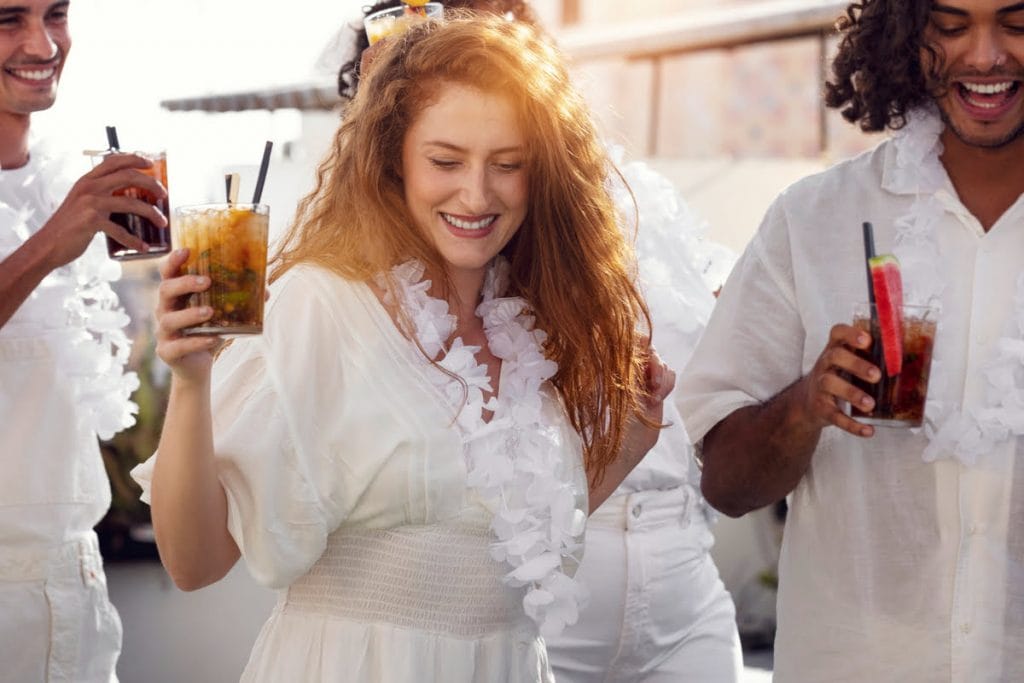
The shift from the cocktail hour to the open bar should feel organic but clear. Use lighting to mark the change: dim the general lights and bring up decorative or dance-floor lighting. It's the perfect moment to switch up the music style and open the dance floor, bringing together all the guests who until then had been scattered across the different food stations.
What should you wear to a cocktail-style wedding?
The dress code often raises questions for guests who read "cocktail" on the invitation. Even though these are structurally informal weddings, elegance is still expected, just with a more relaxed, functional touch suited to a standing format.
For her: cocktail wedding dresses
Etiquette calls for cocktail wedding dresses, generally midi-length (knee-length or a little below). It's the most comfortable and appropriate choice. A cocktail wedding dress makes it easy to move between tables. Long formal gowns should be avoided (those are reserved for maids of honor or sisters at very formal evening weddings), as should overly short dresses. Footwear is crucial: since you'll be standing for hours, a wide heel or elegant wedges are preferable to a stiletto.
For him: suit and accessories
For men, a dark suit is the standard norm. That said, the format allows some leeway, such as skipping the morning coat (more suited to formal daytime ceremonies) or playing with bolder tie colors, or even opting for a bow tie. At summer or beach cocktail-style weddings, you might see guests without a tie, wearing linen suits in light tones, always keeping a polished look.
How much does a cocktail-style wedding cost?
There's a popular belief that a standing celebration is the "cheap" option, but the final cost of a cocktail-style wedding can surprise you. While you save on items like floral centerpieces for every place setting or printed individual menus, other costs go up.
Staffing is the differentiating factor: to keep service flowing so no one has to chase down a tray, you need a higher waiter-to-guest ratio than at a traditional banquet. On top of that, the variety and quality of the food (carved ham, live sushi, seafood) tends to keep the per-person cost in a similar range to a seated wedding, typically between €90 and €150 per person depending on how exclusive the catering is.
Celebrate a special cocktail-style wedding with Esfering
Planning a cocktail-style wedding is a safe bet for fun, freedom and a modern feel. By removing the barriers of head tables and rigid etiquette, you let joy flow naturally among everyone you love. But for the event to be truly memorable, the experience needs to go beyond the food.
At Esfering we specialize in elevating celebrations through cutting-edge audiovisual technology. From our designer portrait stations that blend into even the most demanding decor, to 360 Video Experience or Slow Motion services that capture the party's energy. We bring the fun anywhere across the peninsula: whether you're getting married in Madrid, Barcelona, Valencia, Seville, Málaga or any other city, get in touch so your guests leave with the best memento of your big day.