
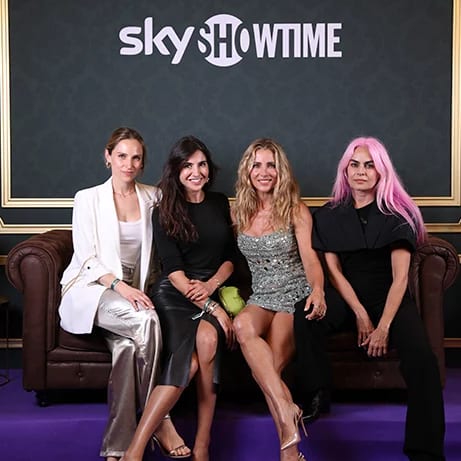
Premieres are some of the most demanding environments for any activation aimed at guests.
Attention is focused on the content, timings are usually planned down to the minute, and every space is part of a narrative designed in advance by the event's organizers.
That's why, when an event photo activation is brought into a premiere, the challenge is rarely just about taking photographs.
The real challenge is making the experience integrate naturally into a production that is already running.
The context: a premiere built around memory and recognition
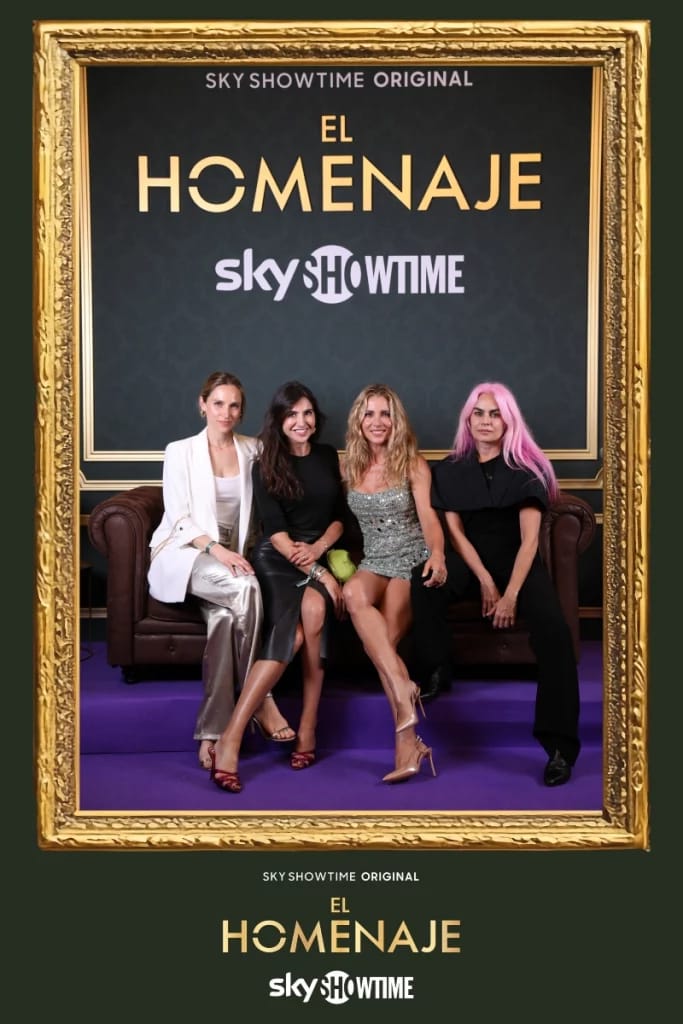
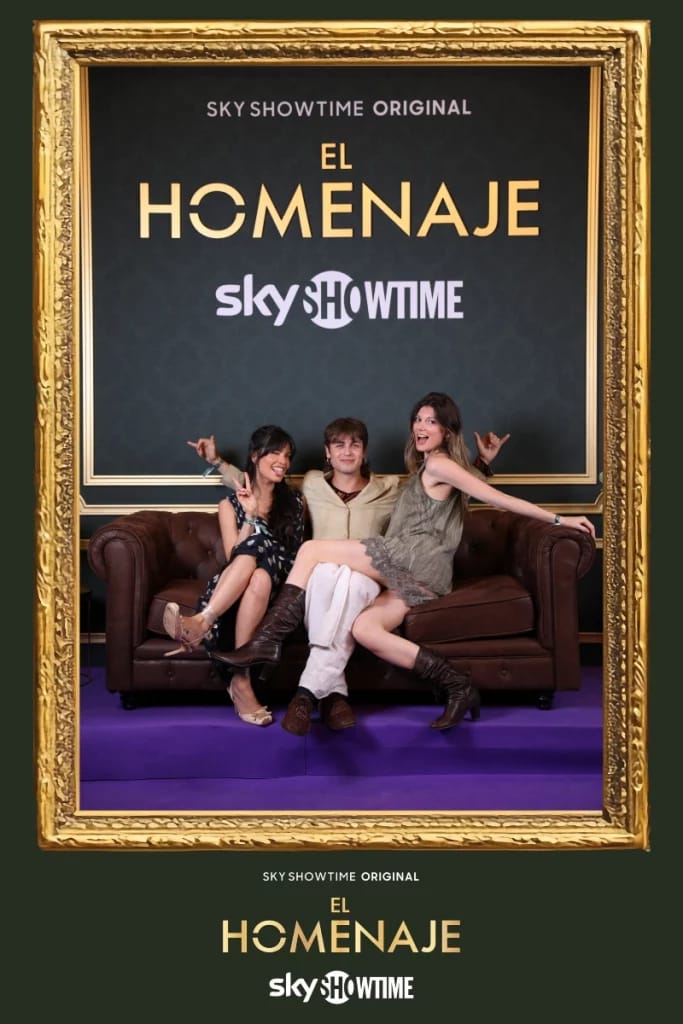
The activation took place during the premiere of El Homenaje, an original SkyShowtime production presented at the Círculo de Bellas Artes in Madrid.
The series starts from a premise closely tied to recognition. What begins as a public tribute ends up becoming an exploration of personal relationships, memories and unresolved matters that had remained hidden beneath the surface.
The series' own subject matter gave the event an emotional dimension beyond a simple presentation for guests.
The premiere aimed to build a carefully considered experience around the story, creating an environment coherent with the production's narrative and giving guests a way to take part in it.
In a premiere, every space usually has a specific function. There is a defined path for guests, a visual narrative designed in advance, and very tight timings that affect every vendor involved.
For that reason, an event photo activation cannot be conceived as a standalone installation that forces the event to adapt to it. Exactly the opposite must happen.
This is the same principle we apply in our experiences for events and galas, where the visual production must integrate into the natural flow of guests.
In that context, a common question arose across many entertainment and brand events:
How do you create a keepsake for guests without breaking the event's visual identity or rhythm?
How to integrate an event photo activation when the set already exists
One of the most interesting aspects of this production was that the experience wasn't built on its own set.
The client had developed a specific space for the activation: a lounge-style setting centered on a sofa, designed so guests could become part of the scene and produce images aligned with the event's overall aesthetic.
Instead of imposing an independent visual proposal, the entire photo production was designed around the existing set.
It may seem like a minor detail, but it matters enormously.
When an activation introduces an aesthetic completely different from the event's own, the result usually reads as something added on.
When it integrates into the existing creative direction, the experience feels like a natural part of the guest's journey.
The photographs stop being just a keepsake and become part of the premiere's own visual identity.
Less than an hour to transform the space
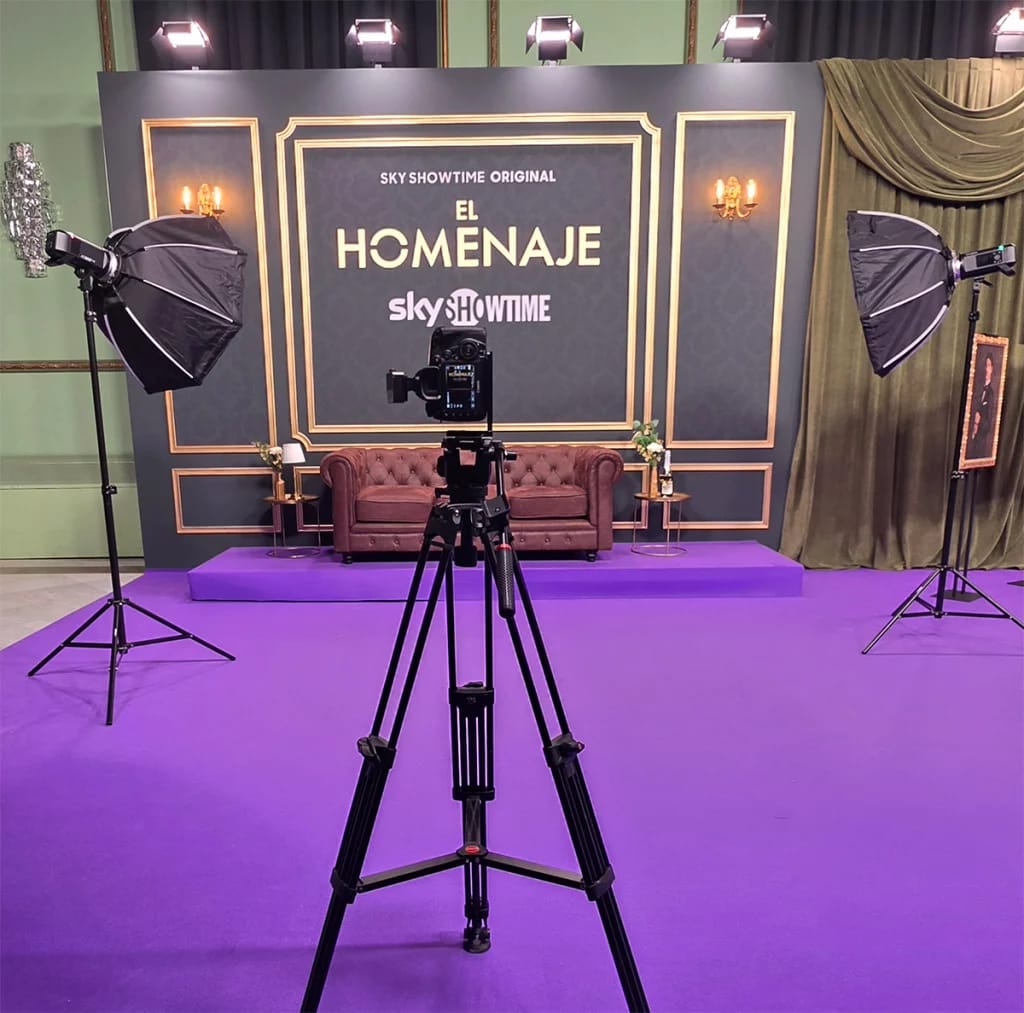
The main operational challenge came during the scene change.
The space had previously been used for the premiere's official photocall.
Once that phase was over, the existing setup had to be dismantled and the new experience fully prepared before guests returned.
The available window coincided with the screening of the series' first episode.
Less than an hour.
In that time, the space had to be transformed, the production adapted, and everything made ready to welcome guests back.
This kind of situation is common in corporate events, galas and premieres.
Coordination between vendors, the ability to adapt and speed of execution are often as important as the photographic quality itself.
In fact, the best sign that a production has worked well is that guests never notice the complexity behind it.
Why an event photo activation must integrate into the production
There's a common tendency to think an activation should stand out on its own.
At high-end events, however, the opposite is usually true.
The most effective experiences are the ones that seem to have been part of the event from the start.
They don't compete with the main content.
They don't interrupt the guests' journey.
They don't try to become the main attraction.
They simply extend the experience the organizers have already designed.
In the case of El Homenaje, the photo activation wasn't meant to replace the series or the premiere as the center of attention.
Its role was to complement the experience and give guests a way to keep a memento connected to the event's visual world.
What we learned from this production
More and more brands, platforms and organizers are looking for experiences capable of generating memory, participation and content without disrupting how the production runs.
To achieve that, the key is rarely about adding more elements.
It's usually about integrating them better.
Technology, lighting and image quality remain essential, but when working within a complex production, the real difference lies in the ability to adapt to the existing environment and execute with precision.
And in a series like El Homenaje, where the story revolves precisely around memory, recognition and personal relationships, it feels especially meaningful that guests could also keep a physical memento of the experience they lived during the premiere.
Because beyond the photography, that was the activation's true purpose: turning a single moment of the event into something that could be kept long after the screening ended.